Monday, April 27, 2015

Meet Loic Mazet from Besançon, France!!


Let's Chat With Loic...

Loic Mazet is a 22-year-old student from Montbeliard, France where he is studying International Trade. He is the recepient of the 2015 Sister City Commmission Grant, a program that provides internships to promote culture in foreign cities. Besançon is Charlottesville's French Sister City.

AFC: So, Loic, why are Besançon and Charlottesville Sister Cities?

LM: You might be surprised to hear that Besançon and Charlottesville aren't so different. Both cities are surrounded by mountainous ranges, have rich histories, and are close to major cities: Besançon is about 2.5 hours from Paris and Charlottesville is about the same from D.C.. They also have comparable populations and similar demographics, at least in terms of university students! Charlottesville is much more concentrated in population density, whereas Besançon's inhabitants are more spread out. But the similarities between the two cannot be ignored!

AFC: Why Charlottesville?

LM: In France, America is like a dream. When I showed my friends pictures of UVA they all said they wanted to come here. I've already traveled to New York, London and Sydney, I wanted to try a smaller US town. 
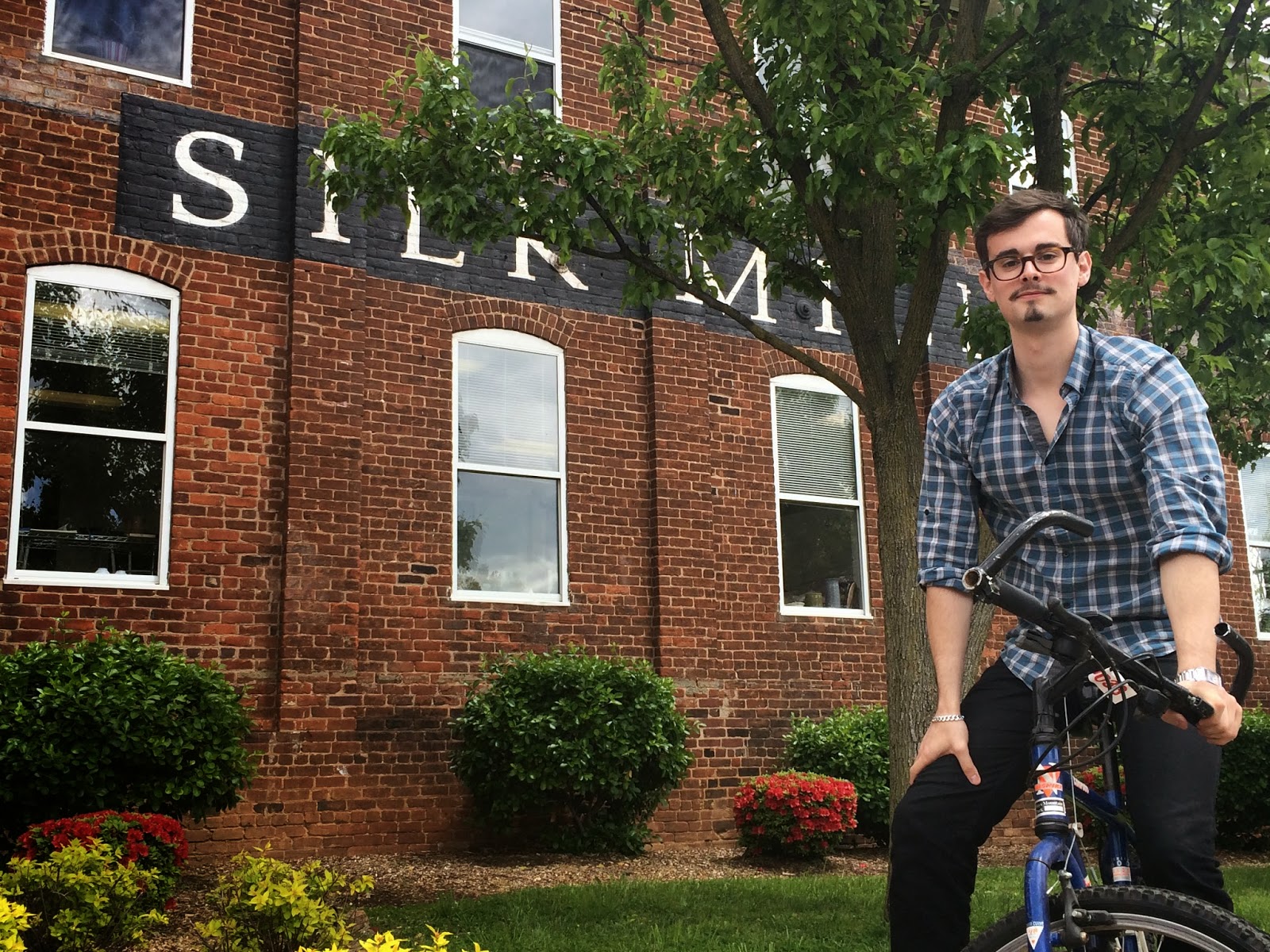

AFC: Any culture shocks so far?

LM: In France gas is so much more expensive than it is here so there aren't huge cars like you all have here in Charlottesville. Also the streets in Besançon are so much smaller and designed for pedestrians so there aren't as many cars on the roads. Also, so far I think Americans here drink more wine than we do in France and dress more casually. But, I think the people here are much friendlier! 

AFC: Oh really?

LM: Sure. In France, people are not very polite. Waiters here are more polite than waiters in France, probably because of the tips. At UVA there are a lot of sports, people are always running and throwing balls and dressed in sports clothes. In France, for example, girls dress like that only for sleeping or to be at home. Girls always wear nice clothes, even to go to the supermarket. As for the wine, in France, we drink wine during dinner and on the weekends, but not during the week, at least not people my age. And girls prefer Rosé wine with added flavors like apricot or raspberry.

AFC: So, Loic, with all of these differences you are noticing, what do you miss most about France?

LM: The food! I miss the bread, the cheese. And the portions here are so much bigger than the ones you will find in France. I miss those things but if I did have the opportunity to stay and study at UVA I definitely would!

AFC: Merci Loic! We can't wait to learn more from you at your FREE presentations at the AFC!!

LM: Yes! Thank you. I would love to see you there. I am at the AFC on Mondays from 12-1pm and Thursdays from 5:30-6:30pm until May 21st. 
Click here to find out more and RSVP!


Monday, April 20, 2015

Meet Jason Becton and Patrick Evans, Co-Owners of Charlottesville's MarieBette


BIENVENUE A MARIEBETTE!


Located right around the corner from the Alliance Française de Charlottesville. MarieBette is Charlottesville's one and only European-styled café and bakery.

Already well-known for their authentic French delights, the café/bakery combo also incorporates other European cooking styles. Because we are obsessed with finding the best baguette and pain au chocolat (chocolate croissant) in the city, we sat down with Jason Becton, one of the owners of MarieBette and picked his brain about ingredients, training, his personal love for all things edible, and why MarieBette?

Jason has always loved food. After he went to Paris for a semester with Wesleyan University, he was bit by the culinary bug but didn't start his culinary career until his late 20s. He attended the French Culinary Institute in New York City and afterwards worked at the Four Seasons Hotel and at L'Atelier De Joël Robuchon. After his brief stint at Robuchon, he moved on to become a sous chef and restaurant chef at The Garden restaurant in the hotel.

Jason eventually decided to open his own business with his partner, Patrick Evans, a Charlottesville native, who has worked at Blue Hill, 81, and Amy's Breads in New York before helping to open two French bakeries called Choc O Pain in New Jersey. They met in culinary school, and decided Charlottesville is better suited to raising their two children, Marian and Elizabeth, for whom the business was named.


As Jason reiterates, "raising kids in the NYC area is a whole different story, and we didn't want to go througall that. When we came [to Charlottesville], we decided to try to start a business," said Jason. "Because we’re partners, both in business and in life, it was appealing to have our own specialties (a bakery and restaurant). We compliment each other and it helps our relationship and not to get in each other’s ways." 

Thank goodness, too. MarieBette's selection of indulgences include items that can't be found elsewhere in C'ville. Items there are made with fresh, pure, and high-quality ingredients. In particular, MarieBette uses high-fat (about 83% fat) butter in their items, which, in combination with their high-quality flour and fresh fruit, makes for a tasty treat.

As Jason explains, "we want the flexibility to not always do things that are French, but French pastries and breads are big inspiration of what we do, both in the kitchen and in the bakery. And it’s been nice for us; we get a lot of French people coming in who live in Charlottesville, which really means a lot. It means we’ve captured a certain amount of authenticity."

Indeed, MarieBette has been named #2 in C-Ville's Top Breakfasts to Try and was featured to have one of C-Ville's best egg dishes.

Although everything on the menu is good, Jason especially likes their apricot frangipane tart, made with apricots, a bit of rosemary, and frangipane, which is essentially an almond cream. And, of course, he also enjoys the classic chocolate croissant, made with the best flour, the best chocolate, and incredible butter (yum!). Some items on MarieBette's menu are seasonal, like the apricot frangipane tart, but the chocolate croissant is available year-round; we highly recommend you stop by on your way to work!

Looking for proof of authenticity? "People say they haven’t had a chocolate croissant like ours since living in France," Jason admitted.

Even if you don't get a chance to go today, don't fret. MarieBette shouldn't be going anywhere anytime soon.

"This had really worked for us. We really wanted something that opened in the mornings, so we could go home and eat dinner together," Jason said, "we felt we filled the role of a niche that wasn’t really present in Charlottesville." When we asked if he had any regrets in opening up his business, Jason said "none at all."

And neither do we.

Friday, April 17, 2015

Did Someone Say...Croissants?

Flaky, buttery, doughy deliciousness. Classically French and found all over the world, croissants are adored by all. 


Despite its heavy French connotations, the croissant was, shockingly enough, not created by a French person or of original French origin. August Zang, an Austrian artillery officer, founded a Viennese bakery called the "Boulangerie Viennoise" in the rue de Richelieu in Paris when he was 92 years old. His business saw some pretty good success and soon inspired French imitators, who turned the Viennese specialty, the kipferl, into what we now know today as a croissant. The French version of the kipferl was named for its crescent (croissant) shape.

While fresh croissants are obviously the best, today 30–40% of the croissants sold in French bakeries and patisseries are frozen. The factory- and pre-made frozen croissants that you've probably eaten were developed in the late 1970s. The croissanterie was explicitly a French response to American-style fast food. 

There are two classic forms of croissants: le croissant au beurre (the butter croissant) and le croissant ordinaire (the ordinary croissant). They have different shapes: the croissant au beurre is more crescent shaped; the croissant ordinaire is a little straighter and more flattened out.


Now, you can see croissant dough wrapped around any praline, almond paste or chocolate before it is baked (pain au chocolat, anyone?) or sliced to include delicious sweet or savoury fillings. Sometimes, the pastry can have dried fruit such as sultanas or raisins, or other fruits such as apples sprinkled upon it for extra sweetness.

The French and Spanish generally eat croissants without filling and without added butter, though they sometimes eat their pastries with almond filling. In the United States, we eat croissants with sweet fillings or toppings pretty often. Warm croissants can also be wonderfully savory, filled with ham and cheese, or feta cheese and spinach. The Germans are also known to fill their croissants with Nutella or persipan. The German-speaking part of Switzerland eats a variation of a croissant, called a Gipfeli, which has a crisper crust and is less buttery than the French-style croissant.

If you're salivating to eat one of these tasty treats right now, I would recommend buying some at your local grocery store or pastry shop. They are difficult to make from scratch:because they are made out of puff pastry, which is very tricky to create. But, if you want to try, here's a recipe, taken from finecooking.com. Enjoy yourself!


Monday, April 13, 2015

Living the Sweet Life in Paris: An Evening with David Lebovitz


Join us this Thursday, April 16th at 6:30pm in UVA's Newcomb Hall Theater for a free conversation about cuisine, culturel and life in Paris with the one and only David Lebovitz!

David Lebovitz is a professional chef and baker. He has been named one of the Top Five Pastry Chefs in the Bay Area by the San Francisco Chronicle and has been featured in Bon Appétit, Chocolatier, Cooking Light, Food + Wine, Cook's Illustrated, The LA Times, Newsweek, Travel and Leisure, The New York Times, People, Saveur, Sunset, and USA Today

His popular blog was released in 1999 to correspond with the publication of his first book, Room for Dessert, which presents recipes that are easy and accessible to make at home. Dvid spent nearly thirteen years at Chez Panisse in Berkeley, California with reknowned chef Alice Waters. Chez Panisse was founded in 1971 by Waters and named the Best Restaurant in America by Gourmet Magazine in 2001. In 2007, Waters won Restaurant Magazine's Lifetime Achievement Award, and was cited as one of the most influential figures in American cooking over the past 50 years. 
The culinary influences for Chez Panisse are largely French, specifically influenced by the small country restaurants of France that cook whatever is fresh that day as well as create menus based on what the markets have to offer. David continues this tradition in his kitchen, cookbooks, and on his blog. 

We are excited to welcome him to UVA to share our love of fresh food, French cuisine and lifestyle, and Parisian culture in this exceptional evening and look forward to seeing you there!

Images taken from http://www.davidlebovitz.com/

Friday, April 10, 2015

Interesting Facts about Haiti


There are only two countries in the American continent that have French as an official language. One, as you probably know by now, given my other blog post about Québec, is Canada; the other is Haiti, a country you've probably also heard of, especially after the tragedy that struck Port-au-Prince in 2010.


The Spanish inhabited Haiti in its early days. In 1492, Christopher Columbus and his crew landed in what is now Môle Saint-Nicolas and claim the land for the Spanish monarchs. Then, French established a presence in Haiti in the early 17th century. By the late 17th century, Haiti became a French colony. In the late 18th century, Haiti's nearly half million slaves revolted under Toussaint L'Ouverture, a former slave. After a prolonged struggle, Haiti became the first post-colonial African descent-led nation in the world. It declared independence in 1804. Fearful of the influence of the slaves' revolution, U.S. President at the time, Thomas Jefferson, refused to recognize the new republic, as did most European nations. The US did not officially recognize Haiti until 1862.

Haiti is a gorgeous island. The two official languages of Haiti are French and Haitian Creole. French is the main written and administratively authorized language, as well as the main language of the press. It's spoken by 40% of Haitians. Haitian Creole is spoken by nearly the entire population.

Unfortunately, the country has issues with its racial caste system. Haitian mulattoes--those born to one parent of African descent and one Caucasian parent--became the nation's social elite and racially privileged, despite comprising only 5% of the nation's population.


Now you know an extremely brief history about the Caribbean country, you can learn some interesting facts about it!

  • It was the first country in the Western Hemisphere to abolished slavery (it took the United States of America another 65 years to do the same) and the only country in the history of mankind whose independence is the result of a successful slave rebellion.
  • It was also the first country in the Western Hemisphere to abolished slavery (it took the United States of America another 65 years to do the same).
  • It was the first Black Republic in the World, and the first country in the American Continent to constitutionally grant all its citizen full rights regardless of gender or race.
  • Haiti is the only country in the world that lists Vodou as an official religion.
  • More than 70 different dictators ruled Haiti between 1804-1915.
  • It is the second oldest independent nation in the Western Hemisphere, after the U.S.

Haiti isn't in the best shape as of right now. More than two-thirds of the labor force do not have formal jobs. Athree-quarters of the population lives on $2 or less per day. Most of the 500,000 residents of Cité Soleil live in poverty; and as of 2009, at least 225,000 Haitian children were working as restavecs (unpaid household servants), considered by the UN to be a modern form of slavery. 

It remains that Haiti is still a country with a rich history and definitely worth visiting, especially to help out some of the people.  

Friday, April 3, 2015

La Fête des Jonquilles


Have you heard of the Daffodil Festival? The Daffodil Festival, or La Fête des Jonquilles in French, is an event that takes place every two years in April in Gérardmer. Gérardmer, located in the Vosges department in Lorraine, in northeastern France, is also famous for a film festival, the Festival international du Film Fantastique (in English, the international festival of fantastic films). The city is located close to Germany an Switzerland, in the gorgeous countryside.

The festival celebrates yellow daffodils, one of the symbols of the city. This festival has been alive since 1935; originally, this festival was created to boost local trade, but then it turned into a day of floats, flowers, and flurries of children in costumes. 


Months before the festival, builders start working on the intricate floats. They start working three to nine months before the actual parade starts. But, for them, the beginning of the festivities is actually the end. All their free time is dedicated to this work--and every year, there are always new floats. As soon as they're out of work, they start working on constructing the structures and collecting the daffodils. In some years, as in 2005 and 2013, the city needed to import daffodils because there wasn't a high enough yield with local flowers--they use about 2.5 million for the celebration!

However, once the parade begins, everyone has a great time. You can see 20-30 floats covered in the yellow flowers march down the streets, encouraged by happy schoolchildren and adults alike. Technically, the celebration is considered to begin the day before, when everyone is invited to help work on the finishing touches of the floats. It's a friendly, community-based activity filled with good wishes and a happy atmosphere.

Gérardmer isn't the only city that gets to enjoy the yellow spectacular, though. Saint Etienne de Montluc, in Loire-Atlantique, has celebrated this day since 1965. It started with Jean Vaillant's a proposal of a grand celebration. For them, the festival kicks off Spring every year. There are always no less than 12 floats at this festival, decked out in "rousinettes"--little bulbs of the flower--and 100% natural foam. There are tons of consumed people, marching bands, and dancers accompanying the floats, along with confetti and streamers.


Whether in Gérômois or Saint Etienne de Montluc, La Fête des Jonquilles is a wonderful occasion for the entire family to experience. If you're ever in either city during the Springtime, check it out!


Friday, March 27, 2015

Senegalese Etiquette


Two countries that share a language do not necessarily share the same culture. Senegal lists French as an official language, but it has a rich and distinctive culture that is worth looking into, separate from France.

For a little background on Senegal, it's an almost entirely Muslim country, located in Western Africa, and bordering the North Atlantic Ocean. Its capital is Dakar and there are over 12 million people living there. French is the official language, but only a small minority of Senegalese, usually those who were educated in colonial-style French schools, speak it regularly. Most people speak their own ethnic language, and there are over ten ethnic groups, half of them more predominant than the other half. 


If you ever plan on traveling to the country, you should learn their customs and general etiquette. I'm here to help. 

For greeting and meeting:
  • Take time to inquire about the health and welfare of family members over a good, long handshake
  • If you're close friends with someone, you can hug him/her/them instead of shaking hands. They may also kiss your cheeks three times, beginning with the left and alternating between the two.
  • Keep in mind that very religious men/women may not shake hands with the other sex.
  • You should first address people by their academic or professional names, or their first or surnames in French. This could change depending on the person's personal preference.
  • It's very common for a person to have a nickname, so if you know someone well enough and others are calling him/her by a nickname, you can too. A lot of people are addressed by their title and their nickname.

As for eating:
  • Wait to be shown your seat--seating is often a show of hierarchy, and you wouldn't want to step on anyone's toes.
  • If you're eating a meal on the floor, sit cross-legged. Try not to let your feet touch the food mat.
  • Don't start eating before the oldest male starts.
  • If you're eating from a communal bowl, eat from the section in front of you--don't reach across the bowl to get something from the other side.
  • Eat with your right hand only
  • Sample each dish. Expect to be urged to get seconds.
  • Leave a little bit of food on your plate. It shows that you've been looked after well.
  • Stay for at least half an hour after eating before you leave, though.
It's always good idea to get to know the practices of a foreign country before visiting it. I hope this will help!


Friday, March 20, 2015

They Have a Language Police, and Other Fun Facts About Québec


If you've always wanted to visit a French-speaking country, keep in mind that France isn't the only place that should be on the list! Although it's not a country, Québec is a very close alternative to satiate your desire for some Francophone culture.


Birthplace to Céline Dion, Québec has much to offer. It is at the centre of French-speaking culture in North America. Its culture is a symbol of a distinct perspective. Not many people know this, but it has some of the strictest language laws in the world.


Signs must be in French, or must use mostly French; food service or retail employees have to greet customers in French; and there are even laws on whether parents can send their children to English or French school. The OQLF (Office québécois de la langue française) are the language police. They hand out fines to noncompliant businesses, and are usually plain clothed and covert.


However, you might be surprised to find that many Québécois speak joual, a "working-class" dialect with unique contractions and anglicisms unlike "proper" Québécois. The most creative and colorful joual usually entails combining multiple words into one, leaving off extra syllables or casually dropping English terms with French pronunciation. For instance, most people simply say le weekend instead of la fin de semaine (which mean the same thing). To punctuate sentences, they use tsé, instead of tu sais (you know)?


Interesting too, Québec has its own national holiday. St. Jean Baptiste Day, or Fête Nationale (translated as "national party") is held on June 24. Because it falls in the beginning of summer, the holiday is characterized by outdoor festivities. St. Jean Baptiste Day is the perfect time to check out the music this province has to offer--just make sure to wear blue, as the background of the Québec flag is blue, as well as the French Canadian version of the flur-de-lis, two symbols of the celebration.

If you ever decide to visit our neighbors up north, make sure to stop by Québec! They might be impressive with your knowledge about their home and it's also a great opportunity to practice your French!


Friday, March 13, 2015

How to Dress More Like the French

One thing the French are known for is fashion. Although I am not personally French and I do not personally live in France, I conducted research for you readers to provide some tips and tricks to look more fashionable if you are French and/or live in France. 

1. Stop wearing sweatpants and sweatshirts. Instead, wear something more classy, yet still casual, like a large oxford shirt and loose trousers.

2. Try layers. Layers always look fashionable and they can keep you warm when it's cold out and comfortable even when it's not.

3. Wear black. It's almost always chic. You can also bring a pop of color to an all black ensemble with accessories or certain pieces of clothing.

4. Speaking of accessories and certain pieces of clothing, subtle embellishments go a long way.

5. Keep makeup light--the classic Parisian style includes playing up your natural beauty with nude lipsticks and light mascara. 

6. Invest in at least one classic piece. A long trenchcoat and heels always look good.

7. Leather is often a good go-to-fabric.

8. Bathe less often. Seriously. It makes your hair easier to style, and apparently it's Jane Birkin's secret.

9. Elegance is not only in your clothing--posture, etiquette, social habits, and overall demeanor can make you look much classier and classically Parisian.

10. Focus on fit. You don't necessarily need to exclusively buy perfectly-tailored clothing, but try to avoid extremely loose fitting and tight fitting clothes.

11. Less is more. Too many patterns can be thought of as tacky. Interesting shapes and textures are generally safe to experiment with.

12. Heels aren't the only shoes you should wear. Flats are Parisians' and your best friend!

13. Invest in some staple clothing. You can build a more flashy style after you nail the basics.

14. Jacket and scarves are essentials. It's hard to look bad in a simple jacket and scarf combo.

15. Have fun with it! Part of the reason we strive so much to be and look more like the French is because they make it look so effortless. Their secret? They're probably not putting massive amounts of effort into it. 

Remember clothing and fashion are not the most important things in the world. Whether you look like a Parisian or like an American doesn't matter so much in the long run. It's always fun to dress up and try to look classy, but don't forget to love yourself for who you are because you are beautiful in your own way! 

Friday, March 6, 2015

The Sweet Smell of France

What do you think of when you hear "perfume"? For me, the mixture of oils and aromatic swirls is associated with the epitome of femininity and generally pleasant causes of sensation: sweetness, lightness, and freshness. Perfume is such an incredibly delicate and ephemeral item that we have to use music terminology to describe its makeup.

We say perfume has three layers of notes. As we pick up an imaginary bottle and let the scent fill the air, let's pretend the smells dance their way into your senses.

The top notes are the scents that first hit you--they form that initial impression. They're the notes that either pique your interest or disgust you into leaving the perfume right then and there and to go buy some shoes or something instead. Usually they're light and disappear quickly, disappearing into the middle notes.

The middle notes form the "heart" of the perfume; they're the main body. Although they're not necessarily the main attraction, they serve an important role. Often, they mask the initial impression of base notes, which, often, are unpleasant. Together, the middle and base form the theme of the scent. Although initially slightly gross, the base notes become more pleasant.

As we near the departure of the perfume, the base notes come out. Base notes bring depth and solidity to a perfume. People typically describes this element of the perfume as "rich" and "deep." You usually don't perceive the base notes until about half an hour after you spritz. The scents chosen for the these notes influence the scents chosen for the top and middle notes.

Now that you know a little more about perfume, let's appreciate some classically French scents chosen and commented on by French nose Francis Kurkdjian, found in Vogue.

Chanel No. 5 (1921)
“It’s the ultimate iconic fragrance that translates the ultimate idea of femininity," Kurkdjian said, "You have the memory of Marilyn Monroe, who wore it, and you have the house of Chanel—together, it’s something incredible."

Cacharel Anaïs Anaïs (1978)
"It’s a bright, sheer floral....It’s something more innocent, the way things were 20 years ago."

Guerlain Shalimar (1925)
"It’s very, very French. You smell it in the theaters, you smell it at the opera. And it really looks like a bottle of perfume."

Yves Saint Laurent Opium (1977)
"The scent is a bit like a perfume done in another century, because the perfumes of that time did not yet have fruit notes, which we use a lot today. The idea of the fragrance itself isn’t as scandalous as it used to be, but it’s still something you identify in a certain way."

Kenzo Flower by Kenzo (2000)
"An Oriental fragrance that's super big and more sheer than dark. You have a rosy, lipstick effect on top and something very powdery, almost like the smell of a compact powder."

Chanel Coco Mademoiselle (2001)
"It’s the idea of a French girl. Very contemporary, chic, elegant. It is a fruity, floral chypre [a family of perfumes]."

Whatever your style of perfume or signature scent, you can find something for you with these classically French fragrances.