Monday, July 6, 2015

Pastry Fit for a Queen


We have all heard of macarons but knowing the difference between itself and a toasted coconut,  delight called a macaroon, can be difficult. 

A macron is the pastry we will be talking about today.  It is delicate, airy, and resembles some sort of a cookie sandwich.  They often remind me of meringues, as the consistency is very similar.  They are constructed by using almond flour, sugar, and egg whites (that gives it the fluffy texture).  The final product of the macaron, is two shells held together by some form of filling, whether a jam or ganache. 

The pastry that is delicious but we are not talking about today is a Macaroon.  This is a baked creation made of egg whites, sugar, and shredded dried coconut.  These are pretty dense in consistency in comparison to the Macaron.
 
To make the distinction a little easier and for pronunciation purposes Macaroon  (/rün/) vs. the Macron (/roh/).  Note the difference in o’s. 

Macarons (not the coconut confections!) have quite the history.  The earliest records of them date back to the time of the Renaissance in Arabic countries, such as Syria, which is still one of the top exporters of almonds. 
 
After the fall of Constantinople around the 1450’s almonds made the move to mainland Europe, in particular, Italy. 
Later in the 1660’s macarons were baked for special occasions.  These beautiful pastries had an appearance at many weddings, fairs, and holy celebrations. 
 
A few hundred years later in the 1890’s the macaron became famous in the neighborhood of Belleville in France. 
 
Now macrons are produced all around the world and can be found in the U.S.A.  In 2010, “Macaron Day NYC” was established in New York City.  During this day, paralleling with Macaron Day Paris, participating bakeries offer a free macaron to those looking to explore and discover the taste of the famous French cookie. 
 
Knowing and having heard that these delicate confections are difficult to make I challenged myself to see if they really do live up to their difficultly level.  I browsed the internet for different recipes and decided that the best way to start was with “Easy French Macarons” as I am obviously a beginner.  After a little bit of searching I decided to go with a Martha Stewart recipe which claimed they would be easy to make.  The recipe is as follows


1 and ¼ cups of almond meal

1 and ¾ cups of confectioner’s sugar

¼ teaspoon of salt

4 large egg whites

½ cup of granulated sugar

¼ teaspoon almond extract

Any form of strained jam or ganache
-------------------------------------------------------------------------------------------------------------
First, I whisked the almond meal and confectioner’s sugar together.  Then sifted over a large bowl.

Second, Beat egg whites until nice and frothy…so about 2 minutes.  I slowly added granulated sugar and almond extract and then mixed it again for about 4-5 minutes to receive shiny peaks. 

Next, I folded the egg whites into the flour/sugar (which can be a very daunting and annoying task) until the mixture is evenly combined.  Mix until the consistency of honey (do not fold too much but just enough to mix all the ingredients).  You can add food coloring at this point if desired.

After that, I transferred the mixture into a pastry bag and cut off ½ off the tip.  I piped out rounds of mixture measuring 1 inch. 

Finally, let them dry for 30 minutes to an hour… Preheat the oven in the meantime to 350.   Then I baked them for 14/15 minutes and let cool. 

The best part, putting the jam or ganache in-between the shells and enjoying!  


I made bilberry, vanilla macarons and they were delicious!


A pastry fit for Marie Antoinette?  She has been famously connected to macarons, which is greatly portrayed in the movie Marie Antoinette. 
 
If you haven’t seen the movie Marie Antoinette you should put it on your list of "must watch".  Kirsten Dunst, who plays Marie Antoinette is often surrounded by luscious, regal piles of macarons and cakes.  It’s worth watching the movie just to drool over the desserts.
 
Ladurée now has new flavor called Marie Antoinette.  Its appearance is quite unique; a creamy tan ganache that carefully holds the two teal shells in place.  It is flavored with their Marie Antoinette tea, which can be described to taste like Chinese black tea with rose petals, citrus, and honey. 
 
 
"Let them eat cake" also known as “Qu’ils mangent de la brioche” is proclaimed to be what Marie Antoinette said during the eve of the French Revolution.  Interestingly enough, the translation in English is not exactly the same as it's French original.
 
It has been noted by many that Marie Antoinette in fact did not say this quote at all, but rather it was Marie-Therese 100 years before. 
 
What do you think?  If Marie Antoinette did in fact say it do you think it could have been a cause of the revolution?  It might have been rather insulting to hear "let them eat brioche", a more expensive bread containing eggs and butter, if they didn't have any bread at all.
 
 
We may never know if Marie Antoinette actually said this famous quote but what we do know is that Bastille Day is just around the corner!
 
Let them eat a CLASSIC THREE COURSE DINNER with a GLASS OF WINE
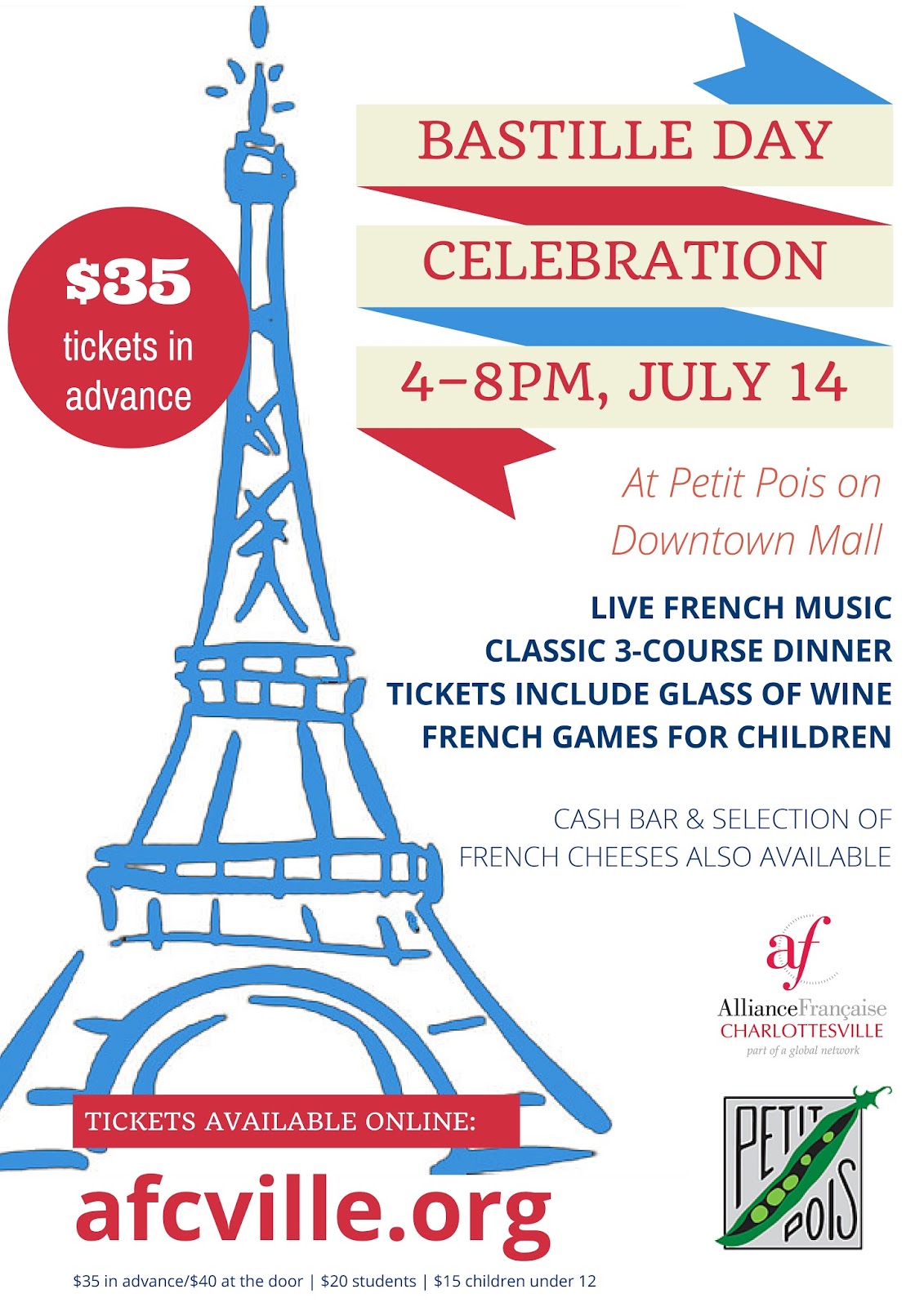
 
For more information check out our website www.afcville.org 
 
RESGISTER NOW WHILE THE PRICE IS LOW!  We will see you there!


Monday, June 29, 2015

Thomas Jefferson: Founding Father... of the French Revolution?

http://cdn.history.com/sites/2/2013/12/jefferson_portrait-P.jpeg 

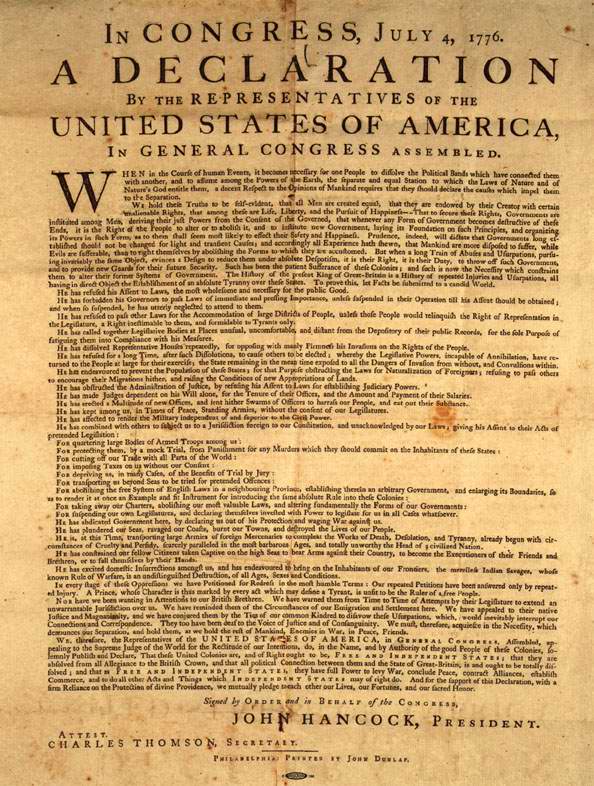
As Bastille Day approaches, it is important that, as citizens of Charlottesville, we recognize the impact that our own Thomas Jefferson had in shaping the events of the French Revolution. Jefferson, of course authored the Declaration of Independence, outlining the principles of self-governance and basic human rights to life, liberty and the pursuit of happiness.

However, Jefferson was also a well-known Francophile, and spent several years in France as an ambassador. At a time when many Americans sided with Britain in the persisting Franco-British rivalry, Jefferson was adamantly pro-French. Upon leaving the country in 1789, he expressed his “sense of its preeminence of character among the nations of the earth.”

It is therefore no surprise that many of the early principles that sparked France’s revolution are outlined in Jefferson’s declaration, as he was well known in Europe as the author of the document. Jefferson predicted that America’s democratic experiment would inspire further revolutions. In a famous analogy, he wrote that America’s “ball of liberty” would roll around the world. France would be the first to be flattened.

https://04varvara.files.wordpress.com/2011/07/anonymous-the-awakening-of-the-third-estate-1789.jpg
"Reveil du Tiers Etat": "The Awakening of the Third Estate"
The nobility (left) and clergy (center) recoil in fear at the newfound
independence of the third estate.
Revolutionary fervor in France reached a boiling point in the summer of 1789. After years of rising bread prices and financial instability under King Louis XVI, the educated bourgeois and furious starving peasants were fed up. The Third Estate, which represented the non-clergy and non-nobility in the French parliament, began meeting on its own and declared itself the National Assembly.
The Assembly adopted the Declaration of the Rights of Man and of the Citizen in August, which is where Thomas Jefferson most directly influenced the revolution.

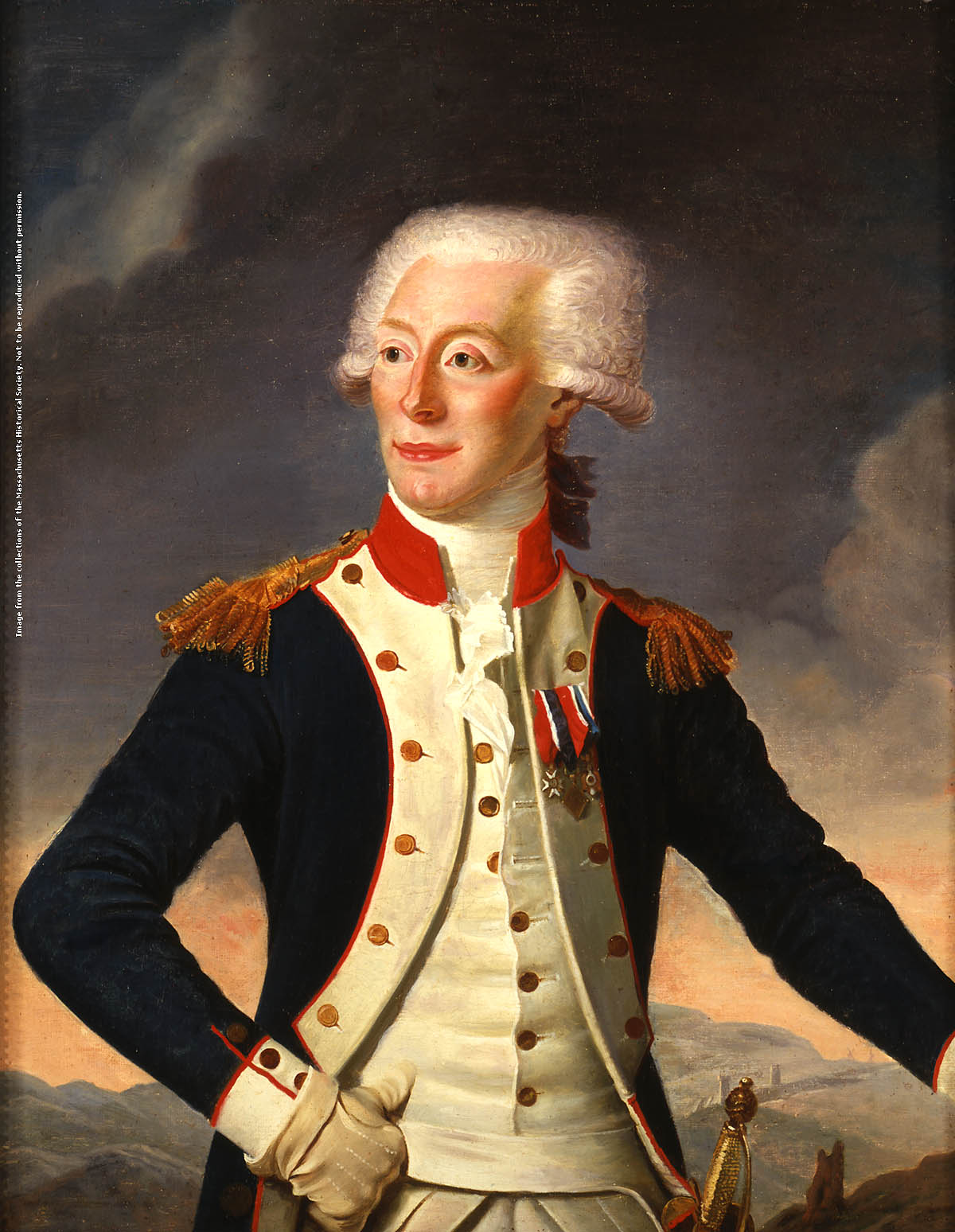
The Marquis de Lafayette, who played an important role in our own American Revolution, introduced the Declaration of the Rights of Man and of the Citizen. While this document differed from the Declaration of Independence in some ways, it was undeniably inspired by Jefferson’s original work. In fact, Lafayette even wrote to Jefferson asking for “observations” and comments on his ideas before presenting the document to the National Assembly.

http://www.masshist.org/database/images/489_lg.jpg
While Jefferson was in Paris, he became a close friend of Lafayette's
http://www.latinorebels.com/wp-content/uploads/2012/07/declaration-of-independence-1776.jpeg In substance, the similarities are also remarkable. Both documents reference a divine, self-evident truth on which fundamental rights are anchored. Both affirm that all men are born free and equal, and in cases of government oppression, they have the right to resist to that oppression (“la résistance à l’oppression”.) Finally, both affirm that sovereignty (“le principe de toute Souveranieté”) rests fundamentally with the people. As Jefferson’s document came first, the importance of the Declaration of Independence in France’s own revolution cannot be understated.

As the revolution dragged on past 1793 and the ruling factions became more and more extreme, Jefferson did eventually express his disapproval with the direction of the revolution. Apparently, he wasn’t too fond of the thousands of executions of political dissenters via the guillotine under Robespierre.

http://boisdejustice.com/1794/1794-1.JPG
Yikes.

However, the symbolism of the revolution still remains incredibly important to the French identity today. And it’s incredible to be able to say that the French Revolution was inspired in part by a patriot born here in Albemarle County, Virginia.

Monday, June 22, 2015

Batteau Festival: This Upcoming Wednesday June 24th


Make it a priority to visit historic Scottsville, Virginia this Wednesday, June 24th and join the town in a celebration for the 30th Annual James River Batteau Festival!  The Batteau Festival is a FREE all-day celebration filled with live music, art/museum exhibits, food vendors, and much more! 

Not only is this the 30th year of operation, but also the strongest year in boat totals.  Twenty-five batteaux total will be floating down the James River for a grand eight day voyage starting in Lynchburg and finishing in Richmond, VA.  


The “batteaux” are long wooden, flat bottomed boats that are directed by poles.  Each batteau will float a crew dressed period costumes along with supplies for their journey. 


We should all go out and celebrate, as Scottsville marks the half way point on their voyage.  The stretch is a total of 120 miles. 


One goal of the James River Batteau Festival other than having a great and memorable time is to preserve the heritage of the batteau and its voyage.  The first batteau was hand crafted by Anthony Rucker in the mid to late 16th century.  This life style and previous mode of transportation are very important to mark in history.  In previous centuries, this network of transportation was so popular that there were more than 500 batteaux on the James at one point in time.  Many of these boats were carrying items such as Irish linens, tobacco, fine French wines, and more.  As you can see this path from Richmond to Lynchburg was very important for the installation and improvement of trade to the west parts of Virginia.


In the meantime, France was undertaken by political conflict, foreshadowing a future revolution on the horizon.  Look forward to read more about the French Revolution leading up to our Bastille Day Celebration on July 14th. 

Sunday, June 14, 2015

DON'T MISS OUT: Free Screening of Les Choristes

 http://poster.4teachers.org/imgFilePoster/243398.jpg


Head down to Jefferson-Madison Central Library on Tuesday June 30th for a free screening of this academy award nominated French masterpiece! Originally released in 2004, Les Choristes is an inspiring story of the transformative power of music.


Set in 1949 at a boarding school for misbehaved boys, the film follows a young Pierre Morhange (played by Jean-Baptiste Maunier) and his friend Pépinot (Maxence Perrin). Though they are at first subjected to the cruel discipline of their headmaster, Monsieur Rachin (François Berléand), the arrival of a new school teacher, Clément Mathieu (Gérard Jugnot), brightens up the gloomy atmosphere of the school. One day after hearing students singing rude songs about the teachers, Mathieu decides to assemble a choir and teach the students to sing. In the process, Mathieu discovers the remarkable talent of Pierre, helping to transform the troubled child's future.


 http://s001.radikal.ru/i196/1001/cd/3b450b40c0c3.jpg


https://upload.wikimedia.org/wikipedia/en/f/fd/A_Cage_of_Nightingales.jpg
La Cage aux Rossignols (1945) helped inspire the film.
Director Christophe Barratier, whose first feature film was Les Choristes, recounts that the inspiration for the film came in large part from his own childhood, especially between the ages of 4 and 8. He was also greatly inspired by a 1945 French film entitled La Cage aux Rossignols (a cage of nightingales), which also features a choir director who helps troubled teens by teaching them to sing. Barratier said he was "deeply touched" by the film when he saw it as a child, and he even decided to keep the name of the choir director the same from the original. In fact, both movies are inspired by a real educational center called Ker Goat, in which a team of teachers worked to help troubled children through choral singing and other innovative educational methods.

The film includes an incredible soundtrack, featuring the real voice of Jean-Baptiste Maunier, who plays the Morhange in the movie! At the 2005 academy awards, Les Choristes was not only nominated for Best Foreign Language Film but also Best Original Song, Vois sur ton chemin ("Look to Your Path"), which you can enjoy below:


The screening will begin at 6:00pm, and soft drinks and popcorn will be provided. Additionally, AFC member and volunteer Eric Flanagan will introduce the film and host a short discussion on the film afterwards (library doors close at 9pm).

Venez nombreux! Don't miss out on this fun evening!

Be sure to click here to RSVP.


Monday, June 8, 2015

Great Summer Read: Le Petit Prince


We have all heard of the classic, French, children's book Le Petit Prince by Antoine de Saint-Exupéry, but how many have actually read it?  Don't let the words "children's book" deter you, as this small, poetic story can be enjoyed by all ages, and should be.  It is the 3rd most translated book in the world and can be found in more than 350 languages.  So, if you have not read it yet, we suggest you put it on your top summer read list! 

So why is this book important to us?  Why should we read it?   

Le Petit Prince teaches us many substantial lessons to note/learn whether young or mature.  A few lessons to mention;  the dangers of being narrow-minded, enlightenment through exploration, relationships teach us responsibilities, and many more. 


One of my favorite quotes from the book is...

"I must endure the presence of a few caterpillars if I wish to become acquainted with the butterflies."

As you can see, there are many different interpretations for what Saint-Exupéry could have meant.  Perhaps; sometimes to be around beautiful objects, people, or experiences you must learn to accept the not so beautiful parts.  What do you think he meant? 


Another popular quote...

"All grown-ups were once children…but only few of them remember it."

Saint-Exupéry was referring to the fact that as many of us grow up we forget that we once had the innocence and creativity of children.  We become more involved in materials, appearances, and money.  We stop questioning to learn and our curiosity is lost.  In exchange, we start to think we know everything.

You will surely find out that this book is full of emotional conflict; isolation, fear, and love.  Many of Saint-Exupéry's abstract ideas and events in the book have clear connection to his person life.  The desert setting from Le Petit Prince is from when Saint-Exupéery was lost for nearly a week in the Arabian desert.  He experienced loneliness, the sense of death, and fear during that time.  The love between the Prince and the Rose, from the book, comes from his shifty affair with his wife, Consuelo.  Saint-Exupéry had many inspirations from his personal life.  You can find more just from reading the book carefully. 


With that said, we will be celebrating the release of the NEW Le Petit Prince movie (dated in France for 29 July 2015) by hosting a FREE Le Petit Prince Story time at Central Library!  So make sure to mark your calendars for Saturday June 11th and 13th! 

 
Suggested age group: 6 to 9-year-olds

Readings will take place upstairs in the McIntyre Room on:

Saturday, June 13th from 10:30-11:30
and
Saturday, July 11th from 10:30-11:30
 
Location:  Central Library located on Market Street in Downtown Charlottesville. 

Monday, June 1, 2015

Familiarity Abroad: The Importance of Besançon, Charlottesville's Sister City


Kursaal concert hall, Besançon

Two weeks ago, the Alliance received a message from Edward Herring, a newly appointed member of the sister city commission in Charlottesville. Recently, on his last night visiting Besançon with a group of students from Monticello High School, Mr. Herring’s host family took him to hear Orff’s Camina Burana at the Kursaal, a concert hall in Besançon.

“Imagine this,” Herring recalls, “you are traveling… totally immersed in your activity. You are amidst a crowd of strangers, when suddenly, someone calls your name, someone unexpected.”

“As I squeezed my way from my seat… I heard someone say ‘Mister Herring, what are you doing here?’ Some of my recent students from a stint at Charlottesville High School had stopped in Besançon on their way to Geneva.”

Thousands of miles away from Charlottesville, Mr. Herring and his students had suddenly found a sense of familiarity within a foreign place. This sort of chance encounter is exactly the type of benefit to be gained from a sister city relationship.


A central street in Besançon
While French culture obviously seems foreign from an American perspective, it can feel reassuring to be a Charlottesville citizen in Besançon. Through years of cultural exchange, the sister city relationship has created a gateway through which citizens of both cities can experience a much deeper sense of intimacy than through tourism in a non-sister city. In Besançon, there’s a good chance you could find a French citizen who knows an acquaintance of yours from Charlottesville, and that’s a powerful feeling when you’re an ocean away from home.


City schools have helped initiate one of the most dynamic examples of this exchange. Both cities have actively maintained a series of student exchanges that have helped build cultural awareness and develop relationships across the two cities. I once witnessed a group of French students at a UVA football game in the fall with their Charlottesville High School counterparts. Later this spring, I saw a group of young Besançon students parading around UVA’s campus with their teachers, talking and giggling in French.
 
Price (left-center) and Eric (center) with friends in
Besançon

The sister city relationship has personally helped make Besançon a more familiar place for me. Three years ago, I hosted a student from Besançon named Eric over the summer. Eric and I are the same age and have a lot in common, including similar musical tastes and a goofy sense of humor. The next summer, while traveling Europe, I was welcomed by Eric and his family for a few days in Besançon. It was truly fantastic to see the city with a native who I already knew and trusted, someone who had seen my home as well.


Countryside in Franche-Comté
Another positive externality of the sister city program has been to expand the cultural exchange beyond the cities themselves and into the greater surrounding regions of Franche-Comté in France and the Shenandoah Valley in Virginia. I am originally from Staunton, about forty-five minutes from Charlottesville. My alma mater, Robert E. Lee high school, has always sponsored a biennial trip for French and Spanish students to Maîche, a small town about an hour from Besançon. Additionally, students from Staunton and even Lexington have taken classes and taught English in Besançon in recent years. In this way, the curiously similar agrarian regions of France and Virginia have become intertwined.


Countryside in the Shenandoah Valley

At the end of his letter, Mr. Herring remarked that he could “barely wait to go back to Besançon and see whom else [he] will run into.” Indeed, with each passing year, citizens of the two cities have formed lasting bonds with the people and places, domestic and foreign, they’ve gotten to know through this relationship. For over twenty-five years, and hopefully for many more to come, Charlottesville and Besançon have helped foster these cross-cultural exchanges. For those hoping to broaden their experience with French culture, it is an absolute blessing.  


Written by Price Gillock, AFC intern

Monday, May 18, 2015

Allison Zinder @ MarieBette--FREE EVENT June 1st


"Mais, c'est qui cette Allison Zinder?"


Bonne question! 

We are just getting to know Allison and are absolutely thrilled at how we get to introduce her to YOU!

Allison is a native Virginian but French by adoption. She moved to Paris in 1995 where she studied history at the Architecture School of Paris-Belleville. Her love of cooking and teaching lead her to cooking school in the Loire Valley and a return to Paris in 2007 to teach at The European Center for Culinary Professions in Paris' 19th Arrondissement.

In 2004 she began her own business, Paris on the Edge, a website and company that brings together her different passions: cooking, teaching, eating, exploring eastern Paris, French culture and language, and artists and their creative process.

With Paris on the Edge, Allison leads "off-the-beaten path" walking tours of Eastern Paris including: 
Paris of the People: From City to Village 
and
From Meat-Packing to Fruit Picking, Through Quarries and Hills
as well as offering scrumptious cooking classes.

And now YOU can be one of the lucky few to spend an evening with chef and Virginian-Francophile Allison Zinder as she tempts your intellect and your appetite in an evening at MarieBette Café focusing on:

L'Histoire de la Pâtisserie Française
Monday, June 1st
5:30-6:30 pm at MarieBette Café
700 Rose Hill Drive, Charlottesville VA
**we recommend arriving at 5pm to secure a seat and fantastic pastries prepared especially for this event!**

This event is FREE and is sponsored by the following "Francophile" companies:


Monday, April 27, 2015

Meet Loic Mazet from Besançon, France!!


Let's Chat With Loic...

Loic Mazet is a 22-year-old student from Montbeliard, France where he is studying International Trade. He is the recepient of the 2015 Sister City Commmission Grant, a program that provides internships to promote culture in foreign cities. Besançon is Charlottesville's French Sister City.

AFC: So, Loic, why are Besançon and Charlottesville Sister Cities?

LM: You might be surprised to hear that Besançon and Charlottesville aren't so different. Both cities are surrounded by mountainous ranges, have rich histories, and are close to major cities: Besançon is about 2.5 hours from Paris and Charlottesville is about the same from D.C.. They also have comparable populations and similar demographics, at least in terms of university students! Charlottesville is much more concentrated in population density, whereas Besançon's inhabitants are more spread out. But the similarities between the two cannot be ignored!

AFC: Why Charlottesville?

LM: In France, America is like a dream. When I showed my friends pictures of UVA they all said they wanted to come here. I've already traveled to New York, London and Sydney, I wanted to try a smaller US town. 


AFC: Any culture shocks so far?

LM: In France gas is so much more expensive than it is here so there aren't huge cars like you all have here in Charlottesville. Also the streets in Besançon are so much smaller and designed for pedestrians so there aren't as many cars on the roads. Also, so far I think Americans here drink more wine than we do in France and dress more casually. But, I think the people here are much friendlier! 

AFC: Oh really?

LM: Sure. In France, people are not very polite. Waiters here are more polite than waiters in France, probably because of the tips. At UVA there are a lot of sports, people are always running and throwing balls and dressed in sports clothes. In France, for example, girls dress like that only for sleeping or to be at home. Girls always wear nice clothes, even to go to the supermarket. As for the wine, in France, we drink wine during dinner and on the weekends, but not during the week, at least not people my age. And girls prefer Rosé wine with added flavors like apricot or raspberry.

AFC: So, Loic, with all of these differences you are noticing, what do you miss most about France?

LM: The food! I miss the bread, the cheese. And the portions here are so much bigger than the ones you will find in France. I miss those things but if I did have the opportunity to stay and study at UVA I definitely would!

AFC: Merci Loic! We can't wait to learn more from you at your FREE presentations at the AFC!!

LM: Yes! Thank you. I would love to see you there. I am at the AFC on Mondays from 12-1pm and Thursdays from 5:30-6:30pm until May 21st. 
Click here to find out more and RSVP!


Monday, April 20, 2015

Meet Jason Becton and Patrick Evans, Co-Owners of Charlottesville's MarieBette


BIENVENUE A MARIEBETTE!


Located right around the corner from the Alliance Française de Charlottesville. MarieBette is Charlottesville's one and only European-styled café and bakery.

Already well-known for their authentic French delights, the café/bakery combo also incorporates other European cooking styles. Because we are obsessed with finding the best baguette and pain au chocolat (chocolate croissant) in the city, we sat down with Jason Becton, one of the owners of MarieBette and picked his brain about ingredients, training, his personal love for all things edible, and why MarieBette?

Jason has always loved food. After he went to Paris for a semester with Wesleyan University, he was bit by the culinary bug but didn't start his culinary career until his late 20s. He attended the French Culinary Institute in New York City and afterwards worked at the Four Seasons Hotel and at L'Atelier De Joël Robuchon. After his brief stint at Robuchon, he moved on to become a sous chef and restaurant chef at The Garden restaurant in the hotel.

Jason eventually decided to open his own business with his partner, Patrick Evans, a Charlottesville native, who has worked at Blue Hill, 81, and Amy's Breads in New York before helping to open two French bakeries called Choc O Pain in New Jersey. They met in culinary school, and decided Charlottesville is better suited to raising their two children, Marian and Elizabeth, for whom the business was named.


As Jason reiterates, "raising kids in the NYC area is a whole different story, and we didn't want to go througall that. When we came [to Charlottesville], we decided to try to start a business," said Jason. "Because we’re partners, both in business and in life, it was appealing to have our own specialties (a bakery and restaurant). We compliment each other and it helps our relationship and not to get in each other’s ways." 

Thank goodness, too. MarieBette's selection of indulgences include items that can't be found elsewhere in C'ville. Items there are made with fresh, pure, and high-quality ingredients. In particular, MarieBette uses high-fat (about 83% fat) butter in their items, which, in combination with their high-quality flour and fresh fruit, makes for a tasty treat.

As Jason explains, "we want the flexibility to not always do things that are French, but French pastries and breads are big inspiration of what we do, both in the kitchen and in the bakery. And it’s been nice for us; we get a lot of French people coming in who live in Charlottesville, which really means a lot. It means we’ve captured a certain amount of authenticity."

Indeed, MarieBette has been named #2 in C-Ville's Top Breakfasts to Try and was featured to have one of C-Ville's best egg dishes.

Although everything on the menu is good, Jason especially likes their apricot frangipane tart, made with apricots, a bit of rosemary, and frangipane, which is essentially an almond cream. And, of course, he also enjoys the classic chocolate croissant, made with the best flour, the best chocolate, and incredible butter (yum!). Some items on MarieBette's menu are seasonal, like the apricot frangipane tart, but the chocolate croissant is available year-round; we highly recommend you stop by on your way to work!

Looking for proof of authenticity? "People say they haven’t had a chocolate croissant like ours since living in France," Jason admitted.

Even if you don't get a chance to go today, don't fret. MarieBette shouldn't be going anywhere anytime soon.

"This had really worked for us. We really wanted something that opened in the mornings, so we could go home and eat dinner together," Jason said, "we felt we filled the role of a niche that wasn’t really present in Charlottesville." When we asked if he had any regrets in opening up his business, Jason said "none at all."

And neither do we.